Stoxxtip.com
Stoxxtip.com delivers easy-to-use guidance in global stock selection
for investors who wish to generate above-average returns on their portfolio.
Videos
The Explorer is one of the most powerful tools in MetaStock. It gives you the capability to search through thousands of securities at a time to help you find those hidden gems. To take full advantage of this powerful tool, it’s important that you have a good understanding of its capabilities.
Technicals
Apple - Buy the dip?
written on October 14, 2025
After having broken above its 200 day moving average in August 2025, Apple has performed extremely well, culminating in a high of $259 in early October. The stock is well above its falling 200 day moving average of $222. The current price is $247
Research
Could A 'Transaction Tax' Be A Good Thing?
by Lance Roberts
Summary
Over the years, I've heard from several clients who have had trouble disciplining themselves from trading too frequently.
Free trading may save you money on trading costs, but if it causes you to trade rashly, your returns may suffer.
As a fiscal conservative, I'm not too fond of taxes of any sort. I am a firm believer in "free markets."
I recently discussed why "Free, Isn't Really Free" regarding the retail investor. While "free...
Stocks Site
Stoxxtip.com

The Stoxxtip stock scanning module delivers an easy-to-use guidance in global stock selection for investors who wish to generate above-average returns on their portfolio. The Stoxxtip stock scanning module covers four major stocks markets and selects index constituent companies which have delivered the highest performance over the past 40 weeks.The scanning module is updated at the end of each trading week.
Software
Metastock

Whether you're a real-time trader, swing trader, or end-of-day trader, MetaStock delivers reliable buy and sell signals across stocks, options, futures, forex, and more. Join thousands of active traders who choose MetaStock as their go-to stock charting software -- and experience the edge it brings to your trading strategy.
Chart Patterns
The Flag or Pennant Pattern
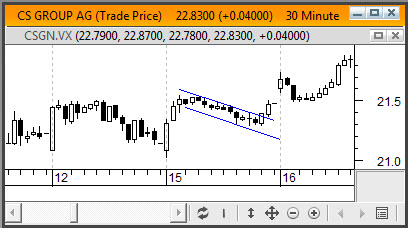
A flag or pennant is a continuation pattern which portrays a period of consolidation in the market before resumption of the original trend. They can be observed in both rising and falling markets. A rise in volume should